You filed your claim, you have a claim number, and now your insurance company has scheduled “the adjuster inspection.” For most homeowners this is the most mysterious step in the whole process — a stranger shows up, climbs on your roof for twenty minutes, and somewhere in that visit the fate of a five-figure decision gets largely settled.
Here's exactly what happens up there, and how to stack the meeting in your favor.
- —The adjuster works for the insurance company — professional, usually fair, but not your advocate.
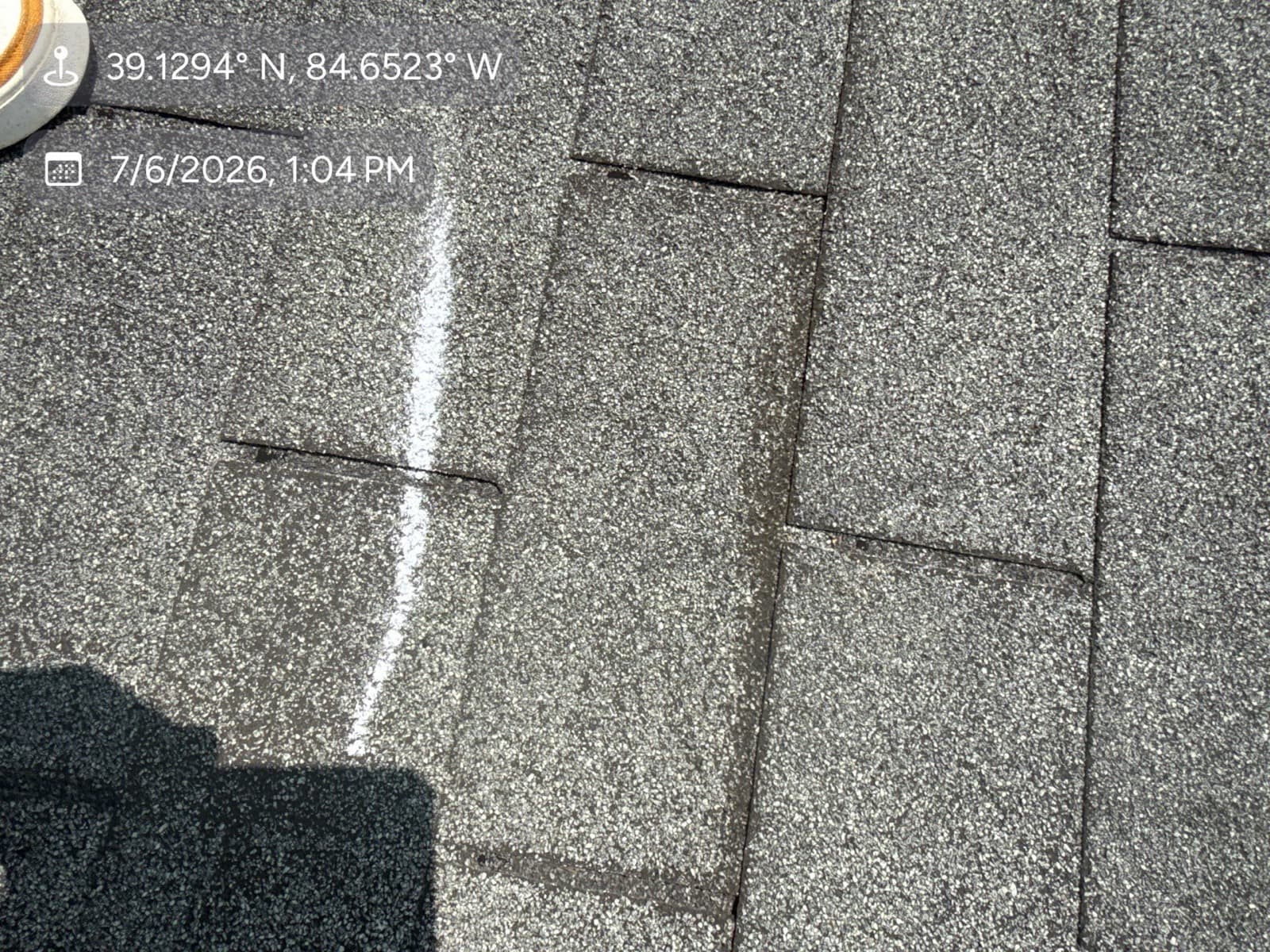
- —They count qualifying hail hits in chalk test squares and check soft metals for corroborating strikes.
- —Have your contractor on the roof at the same time. This is the single biggest thing you control.
- —Hand over documentation: storm date, photos, your roofer's inspection report, receipts for emergency repairs.
- —Don't accept a verbal 'looks like wear and tear' — get every finding in writing.
Who the Adjuster Is (and Isn't)
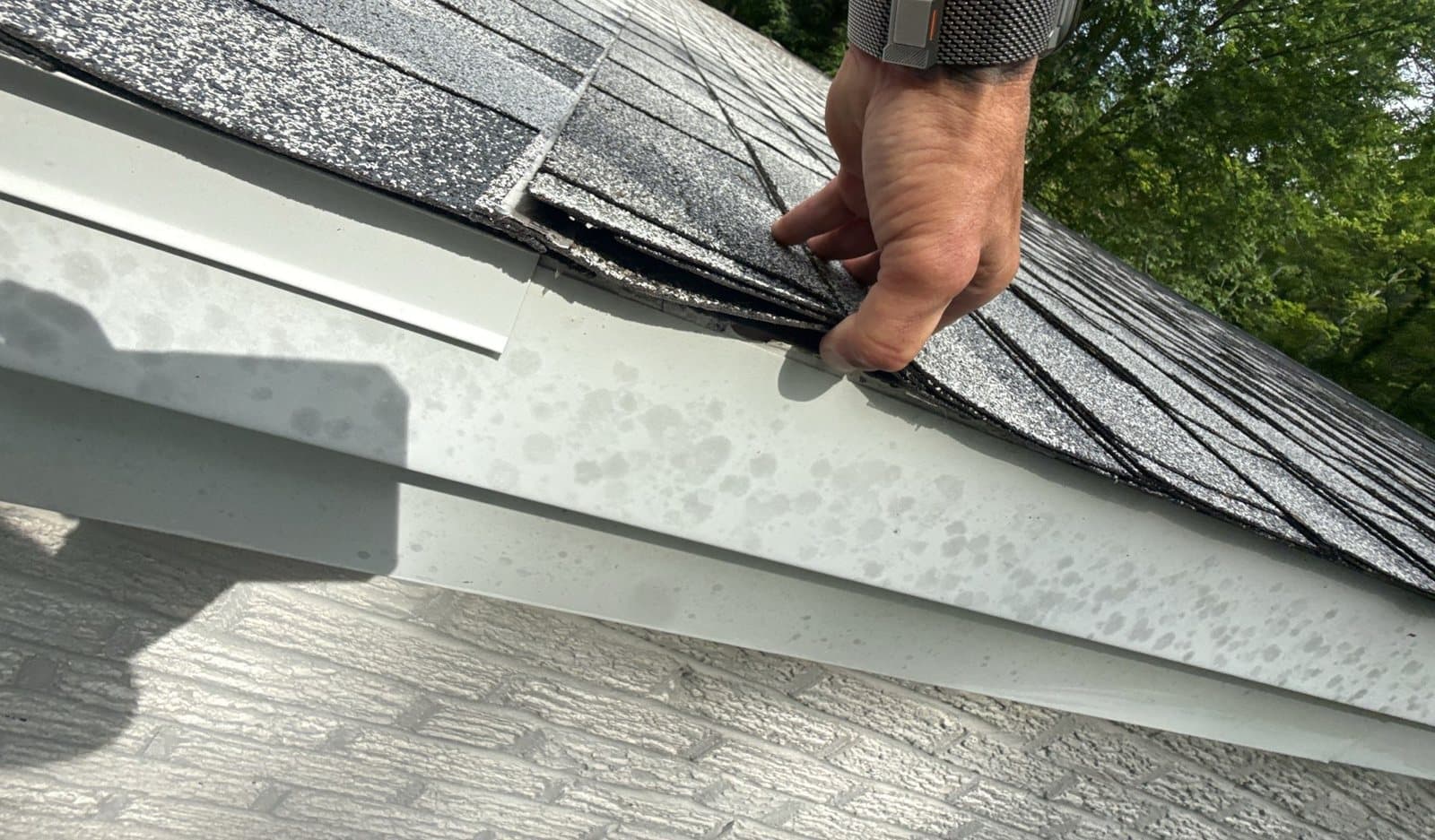
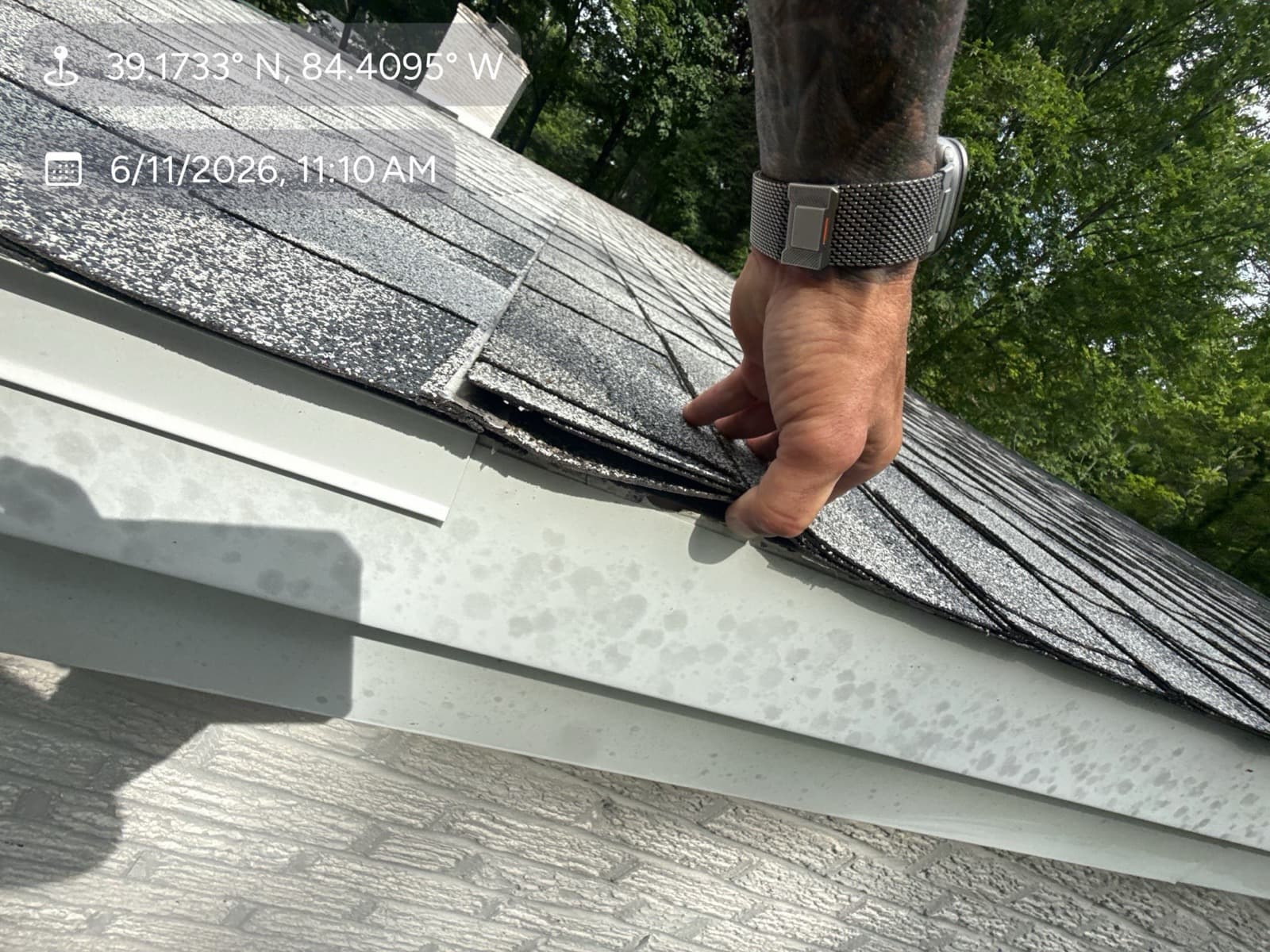
The adjuster is the insurance company's field representative. Their job is to verify that a covered event damaged your roof and to scope what it will cost to restore it. Most are professionals doing honest work — but they are paid by the carrier, they inspect dozens of roofs a week, and a subtle bruise pattern on a shaded slope is easy to miss when nobody's there to point it out.
That's not cynicism; it's just incentive math. You're allowed to even the table.
What They Actually Do on Your Roof
- Walk every slope, checking orientation against the storm's direction.
- Chalk a test square — 10×10 feet per slope — and count qualifying impacts inside it.
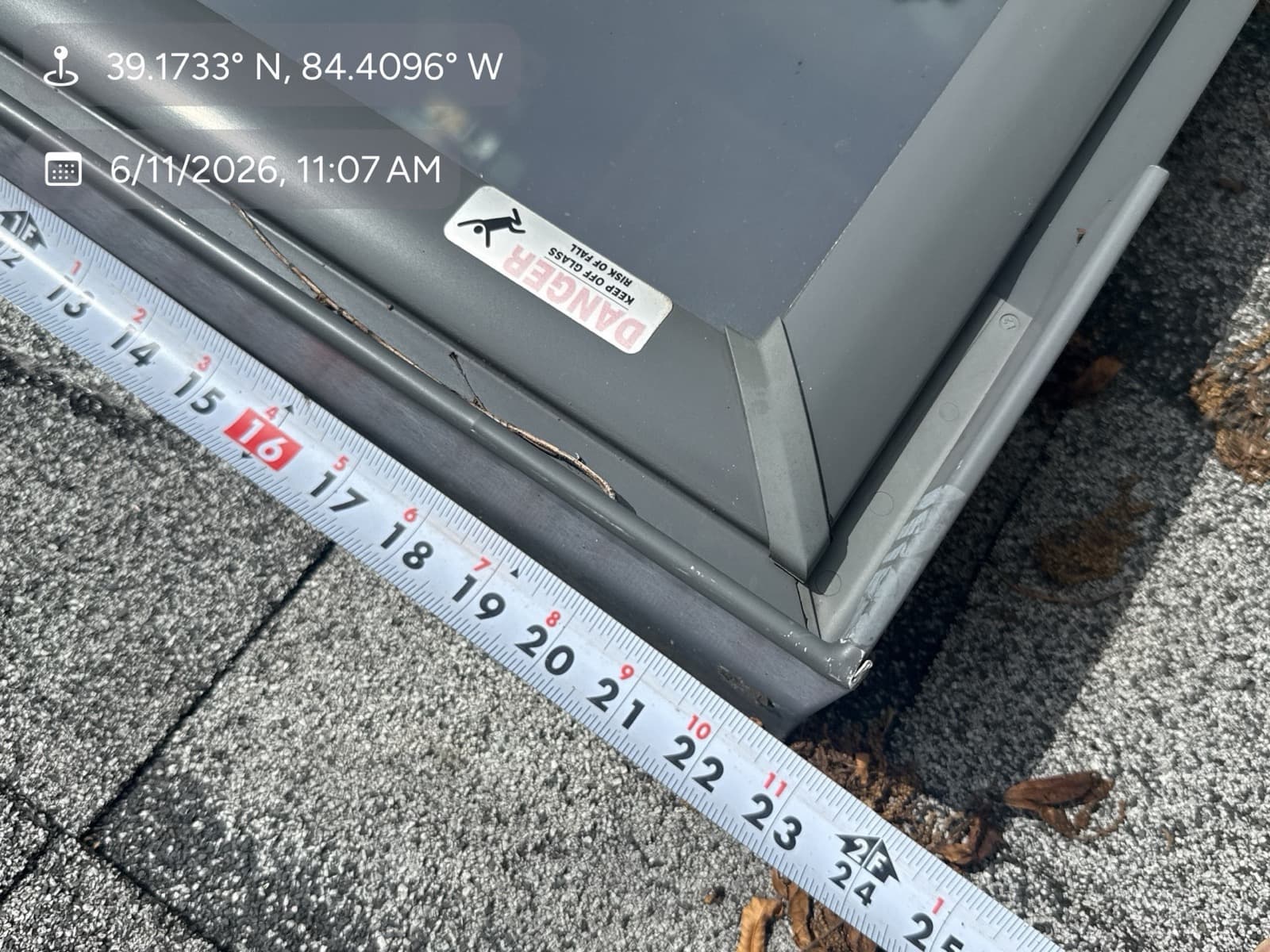
- Check the soft metals: gutters, downspouts, vents, flashing, skylight cladding. Metal records hail like a fingerprint and helps confirm stone size.
- Photograph everything for the claim file, including collateral damage: screens, AC fins, fences, mailboxes.
- Note pre-existing conditions — age, wear, prior repairs — which is where under-documented claims go to die.
How to Prepare (Homeowner Checklist)
- Confirm the appointment window and plan to be home.
- Print or pull up your claim number and policy declarations page.
- Gather your storm-date evidence: photos, videos, news links, neighbor damage.
- Have your contractor's inspection report ready — ours is a labeled photo report, slope by slope.
- List interior symptoms: ceiling stains, attic drips, wet insulation. Show, don't just tell.
- Keep receipts for any emergency tarping or repairs — they're typically reimbursable.
- And most importantly: schedule your roofer to be there.
Tell us the date and we'll be there — free. We'll inspect beforehand, build the photo report, and walk the roof with the adjuster so nothing gets missed.
After the Inspection
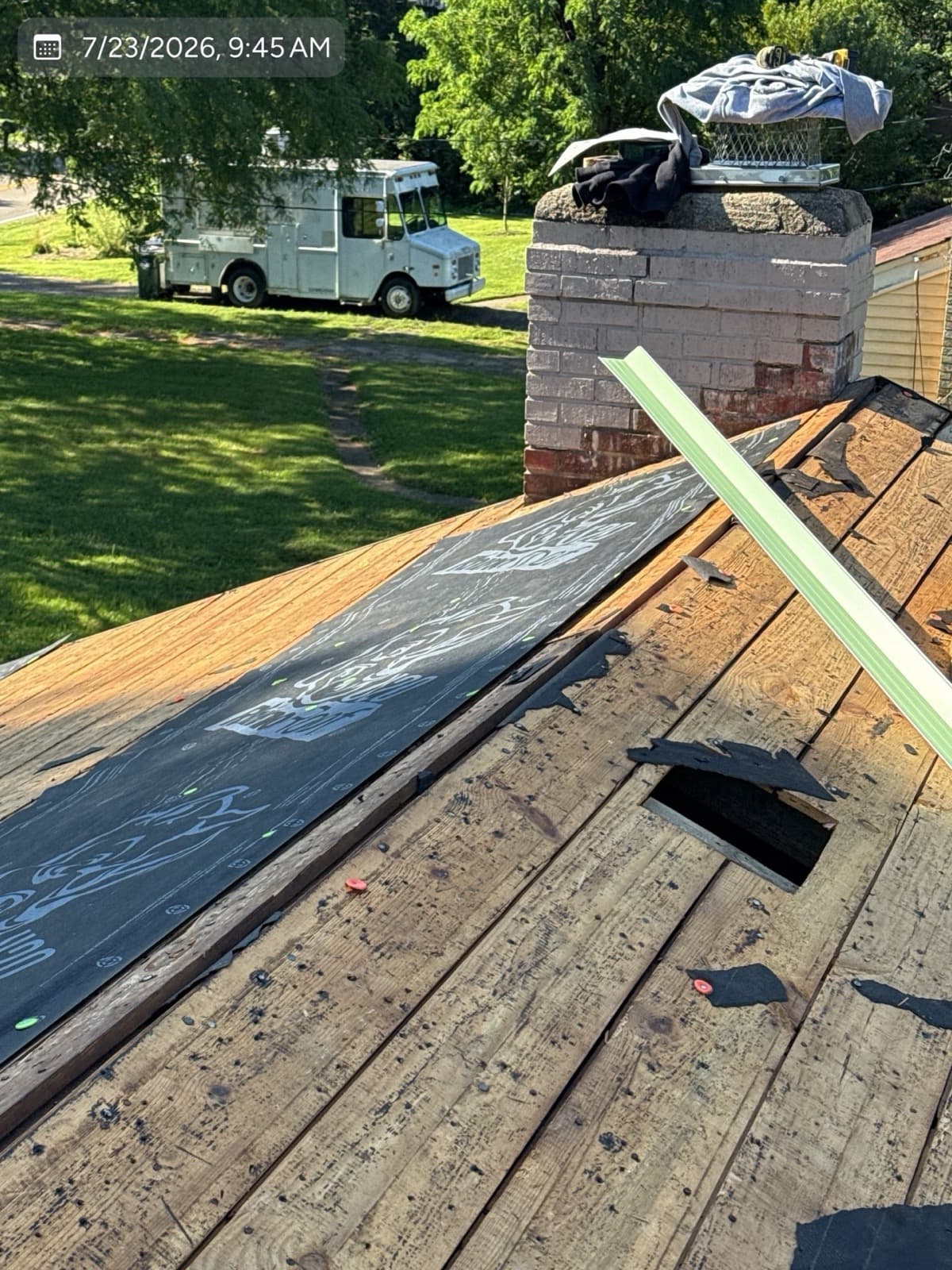
The adjuster writes an estimate in pricing software (usually Xactimate) and your carrier issues the scope and the first check. Read the scope with your contractor before anyone lifts a shingle: missed line items — drip edge, ice & water shield, proper ventilation, decking replacement — get corrected through a supplement, a normal and expected part of the process, not a fight.
If the verdict is “no covered damage” and your documentation says otherwise, ask for a re-inspectionwith your contractor present. It's your policy right, and it changes outcomes more often than you'd think. From there, the money side takes over — two checks, a deductible, and released depreciation — all explained in our guide to what your claim actually pays.
How long does the adjuster inspection take?
Usually 30–60 minutes for a typical home: a walk of every slope, test squares, soft-metal checks, and photos. Complex roofs or interior damage add time.
Should I accept the adjuster's first estimate?
Review it with your contractor first. Adjuster estimates are frequently incomplete on first pass — not out of malice, but because tear-off reveals things a surface inspection can't. Supplements exist for exactly this.
What's the difference between the insurance adjuster and a public adjuster?
The company adjuster works for your insurer. A public adjuster is a licensed professional you can hire (for a percentage of the claim) to represent you. For most straightforward roof claims, a good contractor meeting the adjuster achieves the same outcome without the fee — public adjusters make more sense on large, complex, or disputed losses.
Can I be on the roof during the inspection?
Leave the roof to the professionals — but absolutely be home, ask questions, and request a plain-English summary of findings before the adjuster leaves.
We're a licensed & insured roofing company serving Greater Cincinnati & Northern Kentucky. Our name is our promise: honest inspections with photos you can see, straight answers about whether your roof actually needs work, and installs we document at every stage. Every inspection is free, and if your roof doesn't need replacing, we'll tell you that too. Call us at (513) 675-2699 or request your free inspection below.