A bad storm rolls through Greater Cincinnati, the sirens stop, and the next morning there are shingles in your yard. Now what? If you've never filed a roof insurance claim before, the process feels like a black box — and unfortunately, the homeowners who don't know how it works are the ones who end up paying for roofs their insurance should have covered.
We inspect storm-damaged roofs and meet insurance adjusters on them every single week. This is the exact playbook we walk our own customers through — no jargon, no scare tactics, just the process.
- —Document first, file second: date of storm, photos, and a professional inspection report make or break claims.
- —You typically have about a year to file (check your policy), but sooner is always stronger.
- —Never sign anything that assigns your claim to a contractor before your insurer has approved the scope.
- —Have your roofer on the roof with the adjuster — unrepresented claims get shortchanged far more often.
- —Your insurer can't raise your individual rate just because you filed a weather claim — storms are 'acts of God.'
Step 1: Confirm You Actually Have Damage
Not every storm damages every roof, and filing a claim with no real damage is the one genuinely bad move — you gain nothing and it goes on your claim history (your CLUE report). So before you call anyone, get evidence.
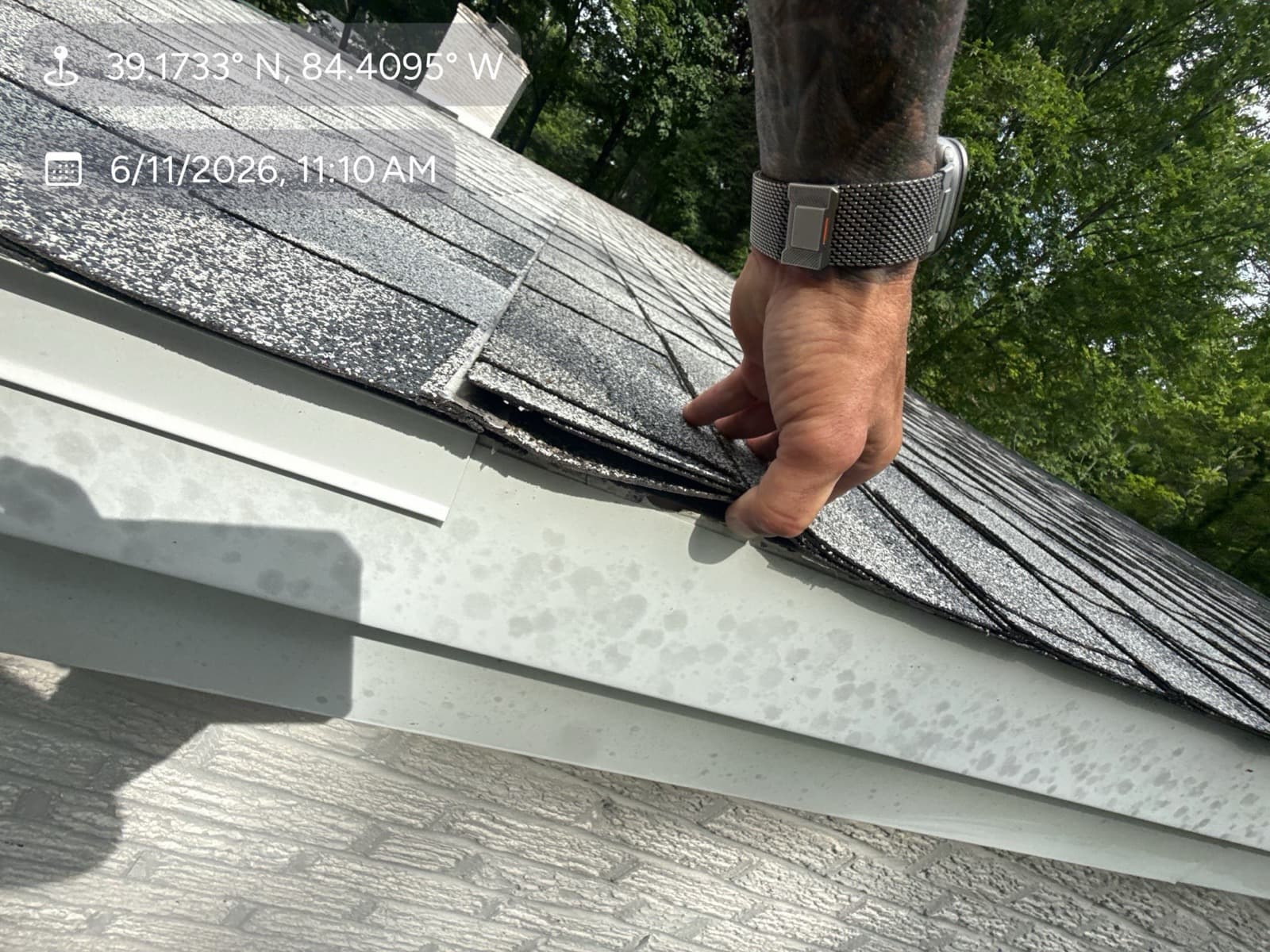
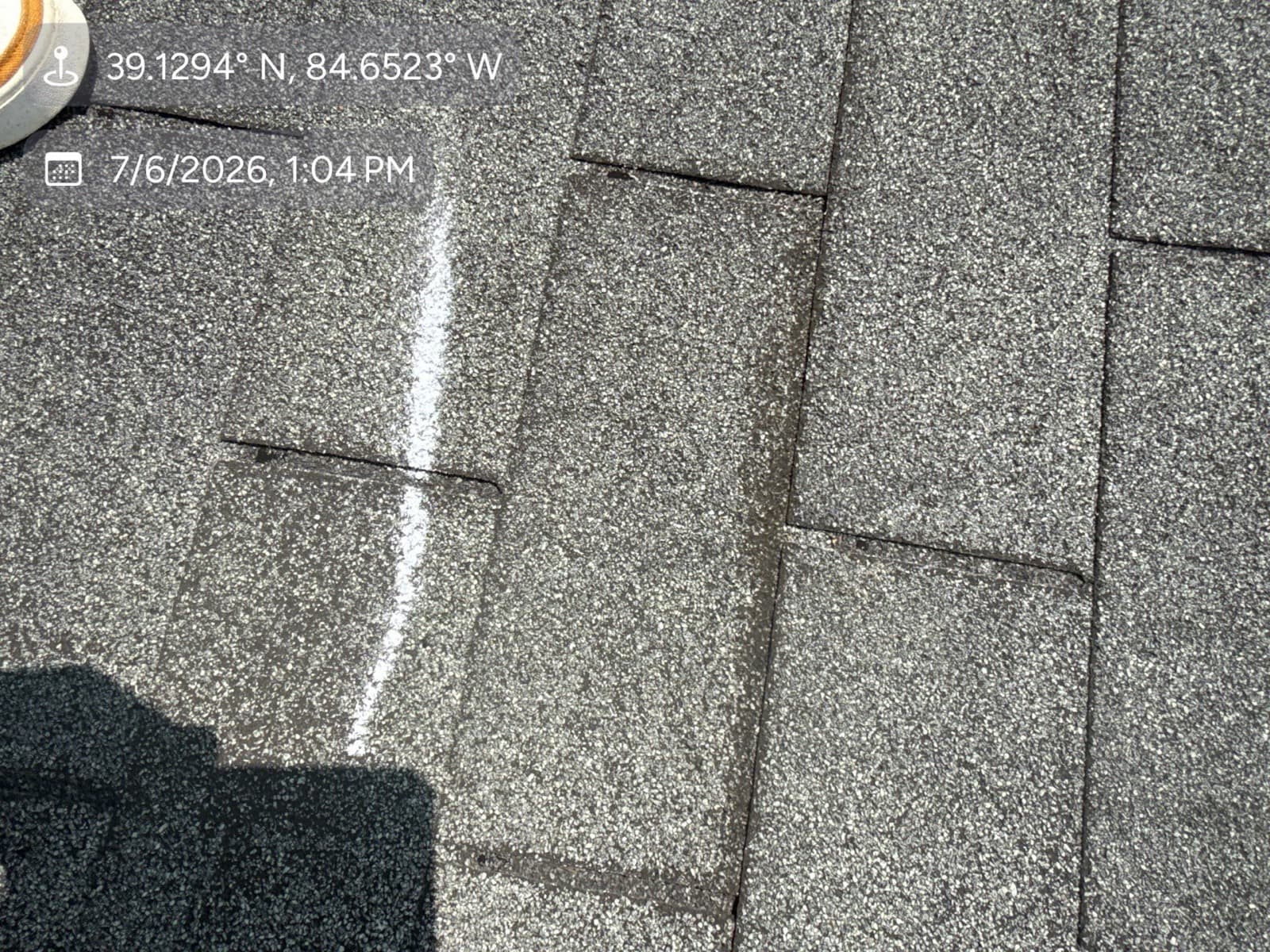
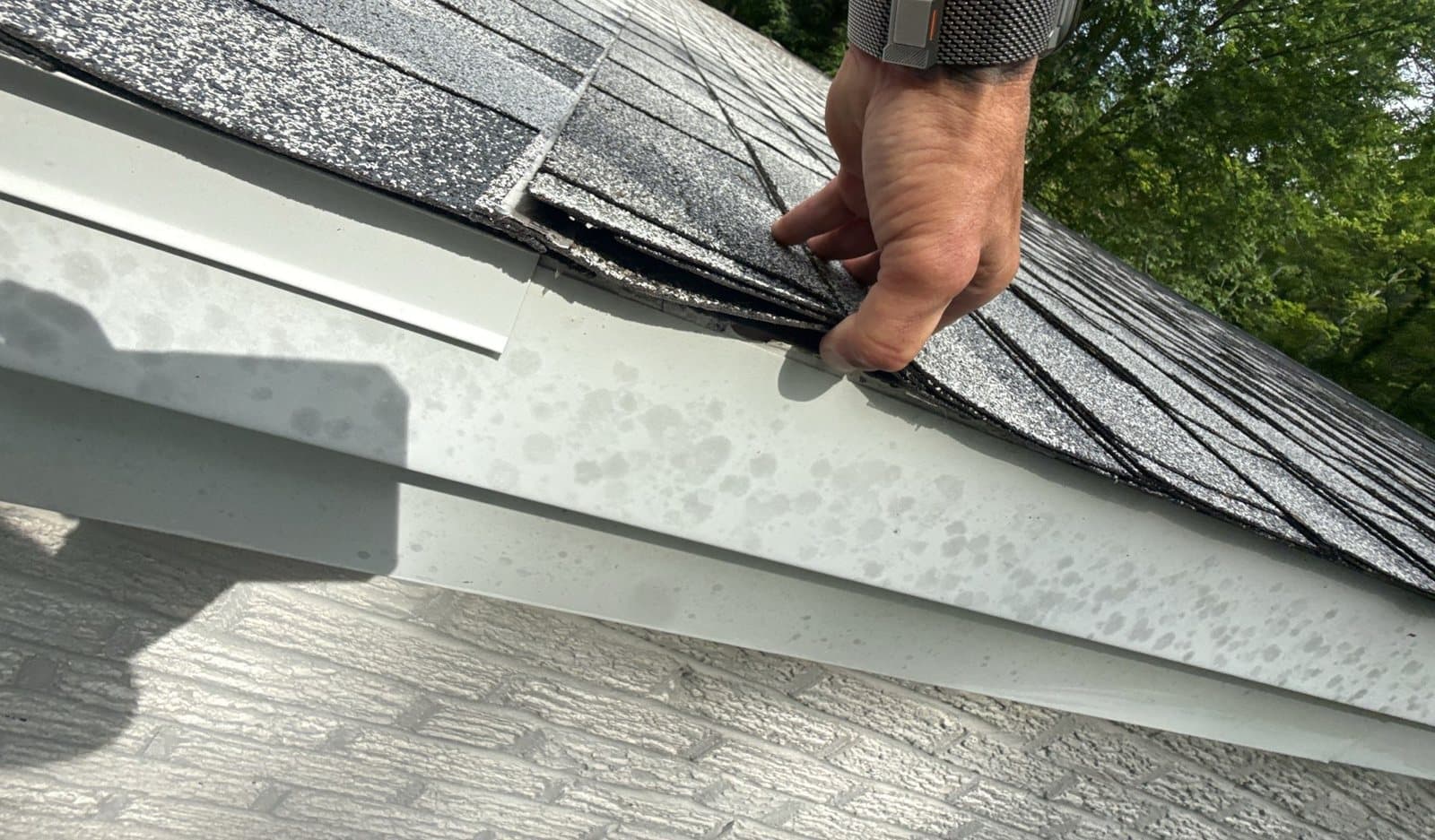
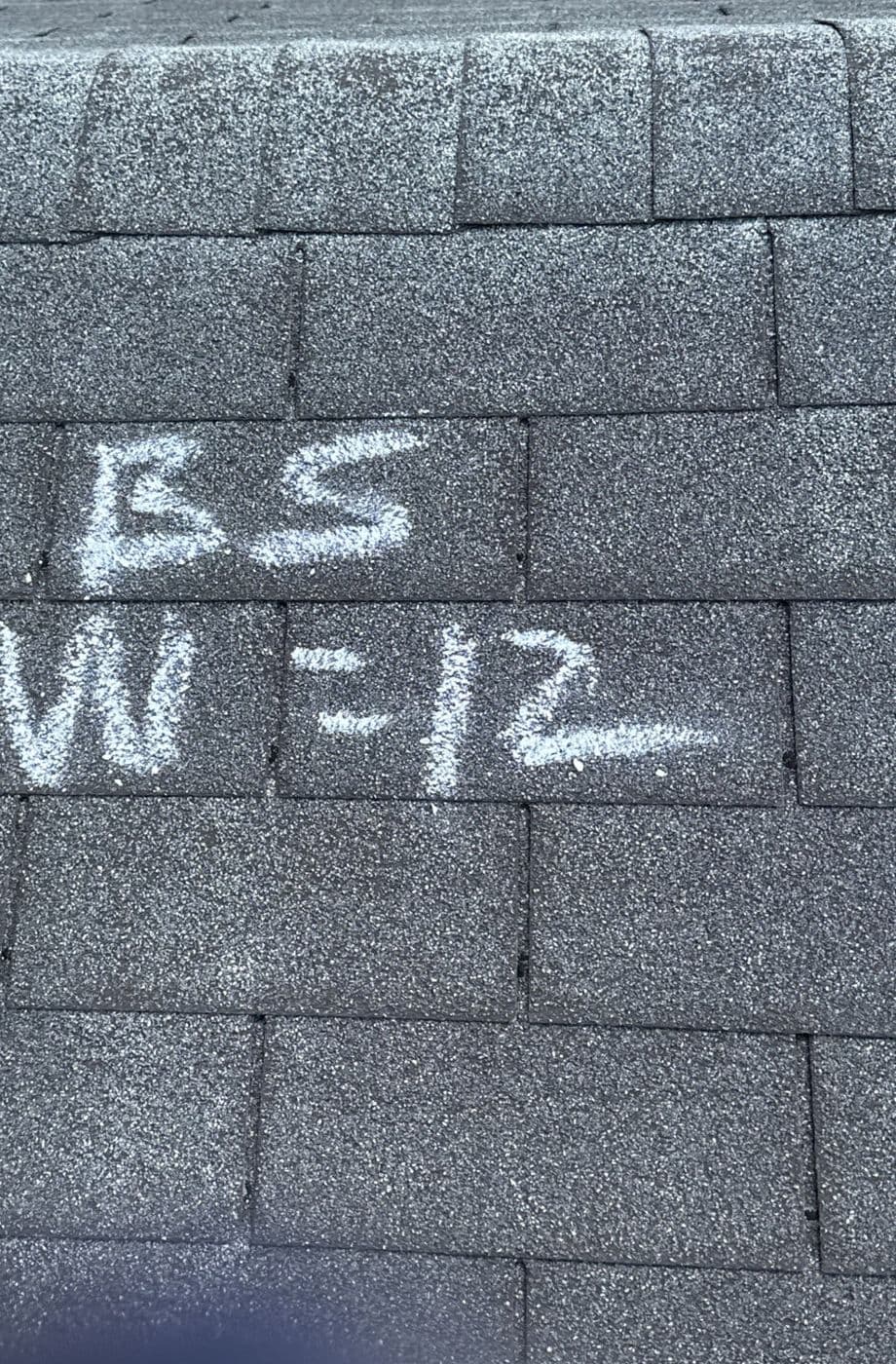
From the ground, look for: shingles or shingle pieces in the yard, granules piling up at downspouts, dented gutters or vents, and creased or lifted shingle tabs. Then get a professional inspection — a legitimate local roofer will do it free and give you photos of everything they find.
Step 2: Document Everything
- The storm date. Your claim will be tied to a specific weather event. Note the date and rough time; news reports and neighbors' damage help corroborate it.
- Photos and video. Wide shots of the house, close-ups of damage, interior shots of any leaks or ceiling stains — timestamped if possible.
- The inspection report. Our reports include labeled photos of every hit, slope by slope. Adjusters take documented claims more seriously — it's that simple.
- Emergency repairs receipts. If water is coming in, you're allowed (and usually required) to prevent further damage. Tarping is covered by most policies — keep the receipt.
Step 3: File the Claim
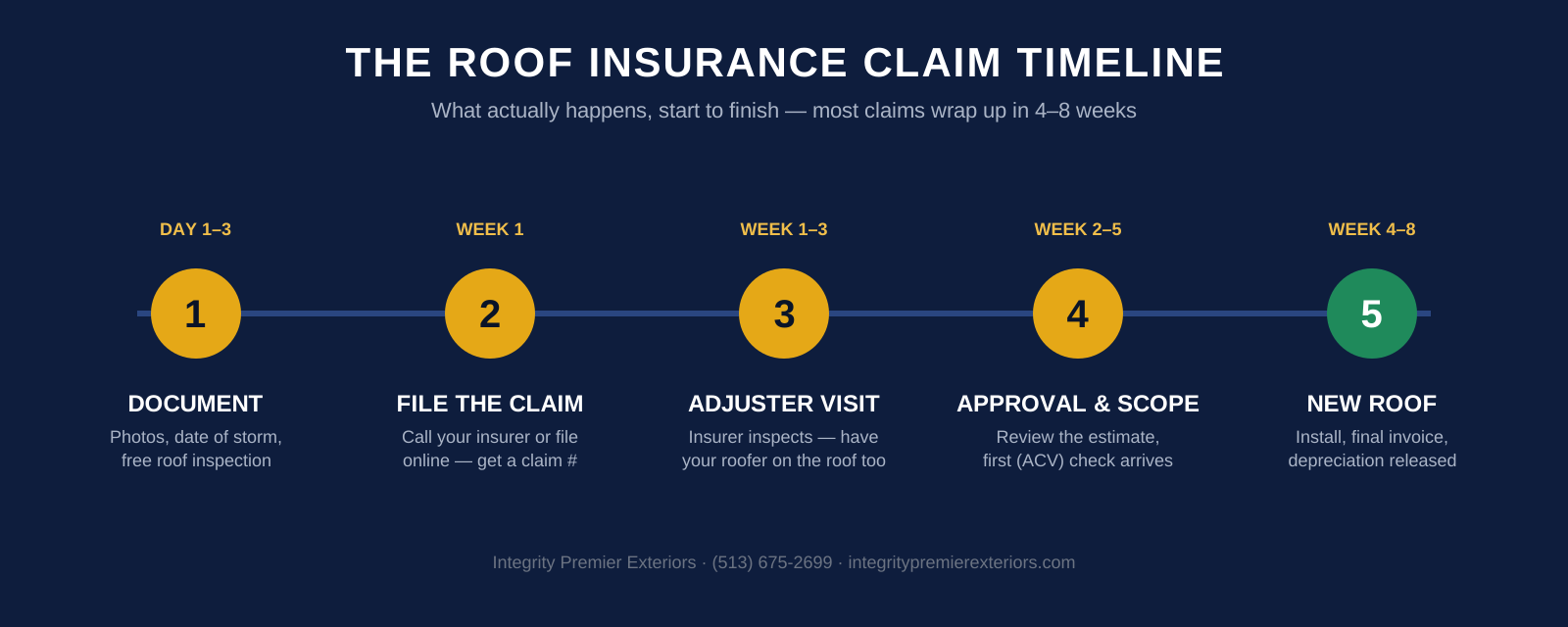
Call the claims number on your policy or file through your insurer's app. You'll give them the storm date, describe the damage, and get a claim number. Write it down — every conversation from here on references it.
Most policies require “prompt” notice, and many set a hard deadline around one year from the date of loss. Don't wait: hail damage doesn't heal, but it does get harder to attribute to a specific storm as months pass.
Step 4: The Adjuster Inspection
Your insurer sends an adjuster to verify the damage. This is the single most important 20 minutes of your claim — and you should not do it alone. Have the roofer who inspected your roof meet the adjuster on-site. They'll walk the roof together, compare findings, and agree on scope in real time, which prevents the “we only found wear and tear” letter that stalls so many claims.
We wrote a full guide on this meeting — what the adjuster actually looks for and how to prepare.
We'll document your roof with photos, tell you honestly whether you have a claim, and meet your adjuster if you do. If there's no damage, we'll tell you that too — and you've lost nothing.
Step 5: Review the Estimate — Then Build
If approved, the insurer issues a scope of work and an estimate, usually paid in two checks: an initial payment (actual cash value) and the recoverable depreciation released after the work is done. Your out-of-pocket cost is your deductible — that's it, and any contractor who offers to “eat” or “waive” it is committing insurance fraud with your name attached.
Confused by ACV, RCV, and depreciation? We broke the money side down with real numbers in this guide to what your claim actually pays.
If the Claim Is Denied
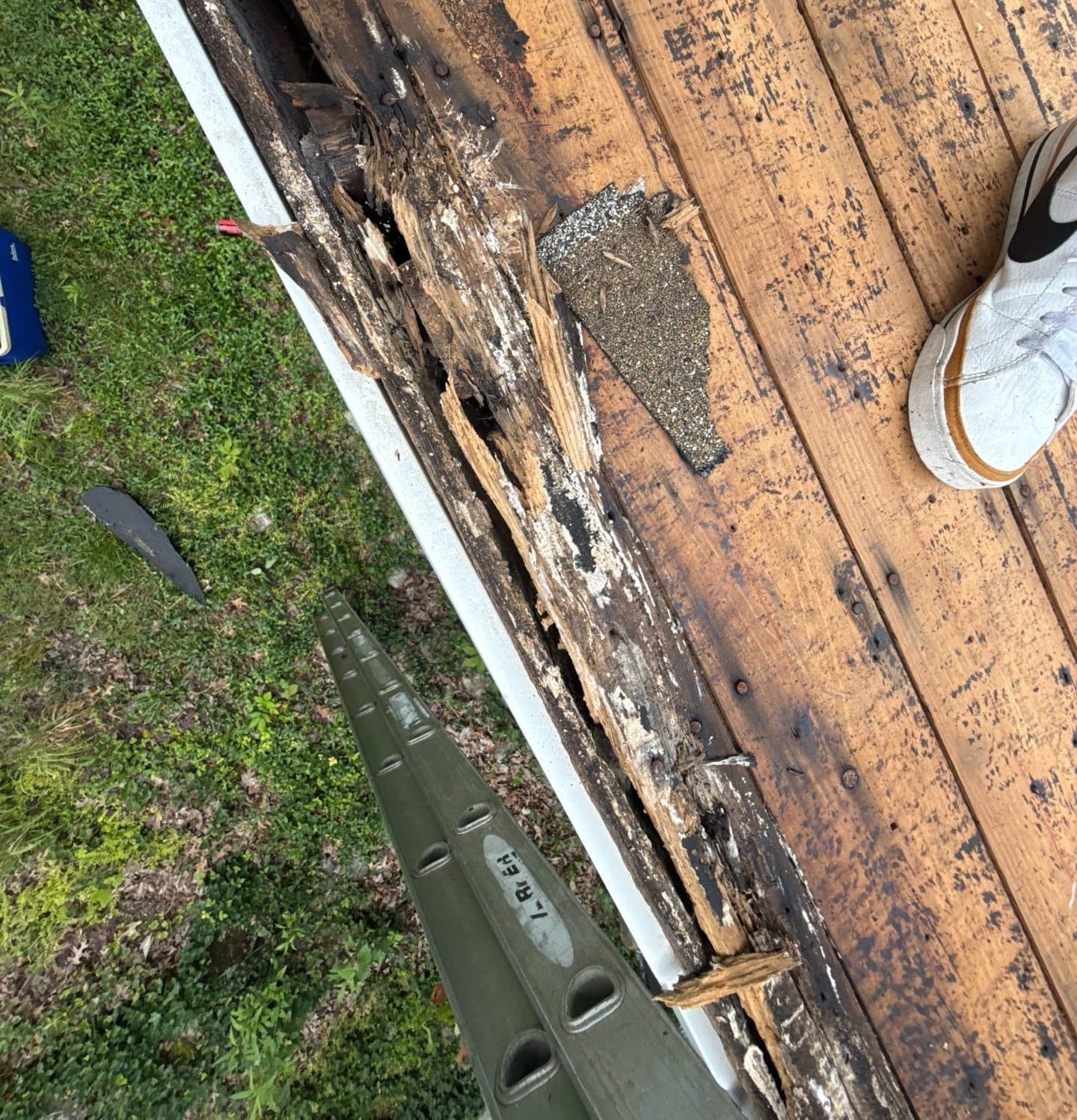
A denial isn't the end. You can request a re-inspection with your contractor present, submit additional documentation, or escalate with your carrier. If you believe you're being treated unfairly, the Ohio Department of Insurance takes consumer complaints. Most “denials” we see are really just under-documented first inspections — which is why step 2 matters so much.
Will filing a claim raise my insurance rates?
Weather claims are considered acts of God — insurers generally can't single you out for a rate increase because hail hit your house. Region-wide rates may move after major storms, but that happens whether you file or not. If your roof is damaged, you're paying for the coverage; use it.
How long do I have to file?
Most policies require prompt notice, and many set a filing window around one year from the storm date. Check your specific policy — and file sooner rather than later, because attribution gets harder with time.
Do I need multiple contractor quotes for an insurance job?
No. Insurance claims aren't a bidding war — the insurer pays a set scope at market pricing. What matters is choosing one trustworthy contractor who will build to that scope and fight for anything the adjuster missed.
What if I can't afford my deductible right now?
Talk to us. We offer financing that can spread your out-of-pocket cost into manageable monthly payments. What we won't do is 'waive' the deductible — that's fraud, and contractors who offer it are cutting the cost out of your roof.
We're a licensed & insured roofing company serving Greater Cincinnati & Northern Kentucky. Our name is our promise: honest inspections with photos you can see, straight answers about whether your roof actually needs work, and installs we document at every stage. Every inspection is free, and if your roof doesn't need replacing, we'll tell you that too. Call us at (513) 675-2699 or request your free inspection below.