Here's the frustrating thing about hail: a storm can take five years off your roof's life without leaving a single sign you'd notice from the driveway. The damage is real — crushed granules, bruised mats, broken seals — but it hides in plain sight until it turns into leaks. By then, the claim window for the storm that caused it may have closed.
After a hailstorm crosses Greater Cincinnati or Northern Kentucky, run through this checklist. Most of it can be done safely from the ground in ten minutes.
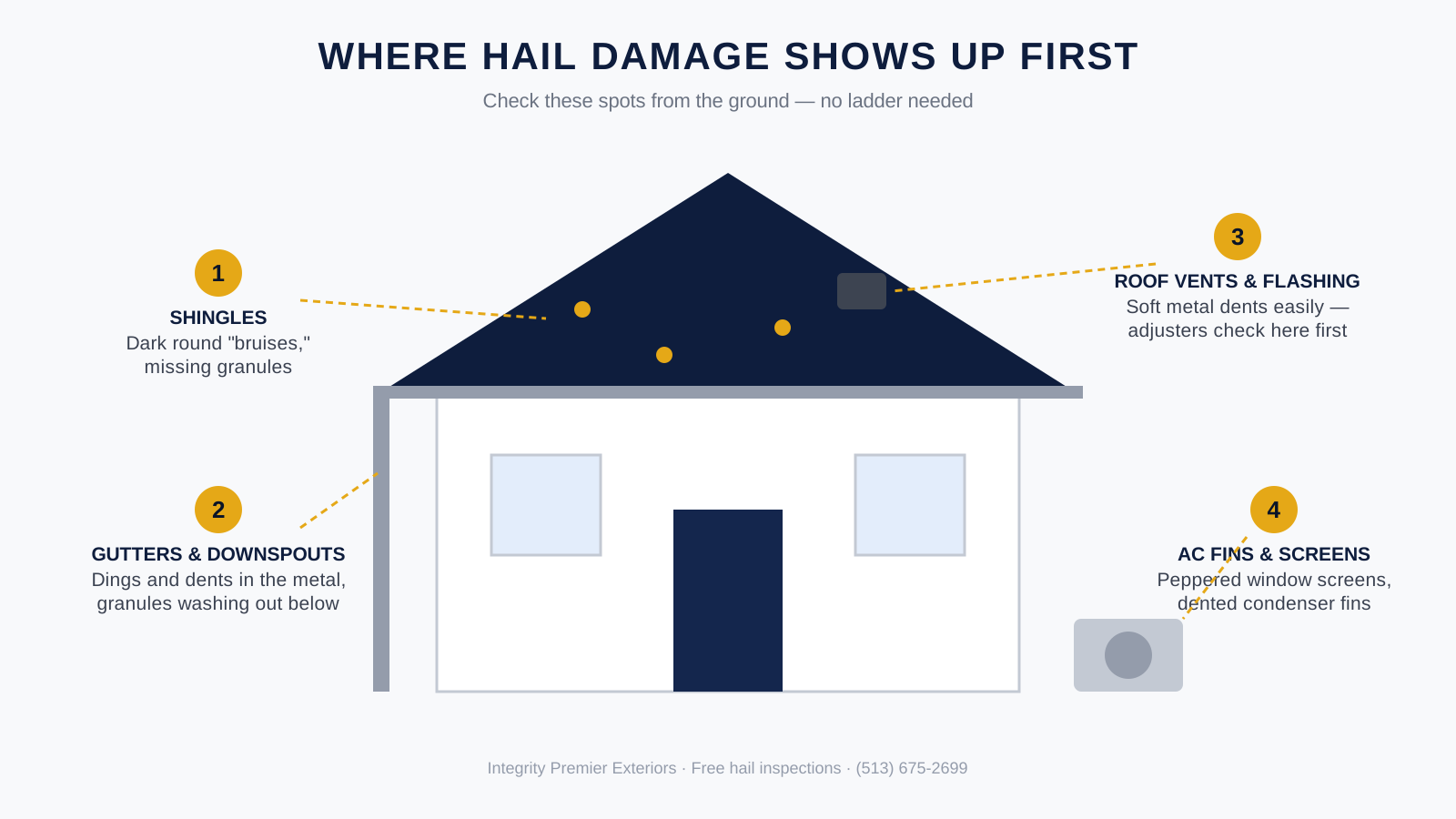
From the Ground (No Ladder Needed)
1. Granules piling up at downspouts
Hail knocks the protective granules off shingles, and rain washes them down. A small pile of what looks like coarse black sand at the bottom of your downspouts after a storm is one of the most reliable early signs.
2. Dented gutters, downspouts, and window wraps
Aluminum dents at far lower impact than shingles fail. If your gutters took visible hits, there's a very good chance your shingles did too — adjusters read soft-metal damage exactly this way.
3. Peppered window screens and dented AC fins
Window screens with small tears or “pepper” marks and flattened fins on your AC condenser both corroborate hail size and direction. Photograph them.
4. Shingle pieces or whole tabs in the yard
Wind and hail travel together. Broken tabs on the lawn mean the roof took real force — and wind damage is claimable under the same storm event.
On the Roof (Leave This Part to Us)
5. Bruises — the classic hail signature
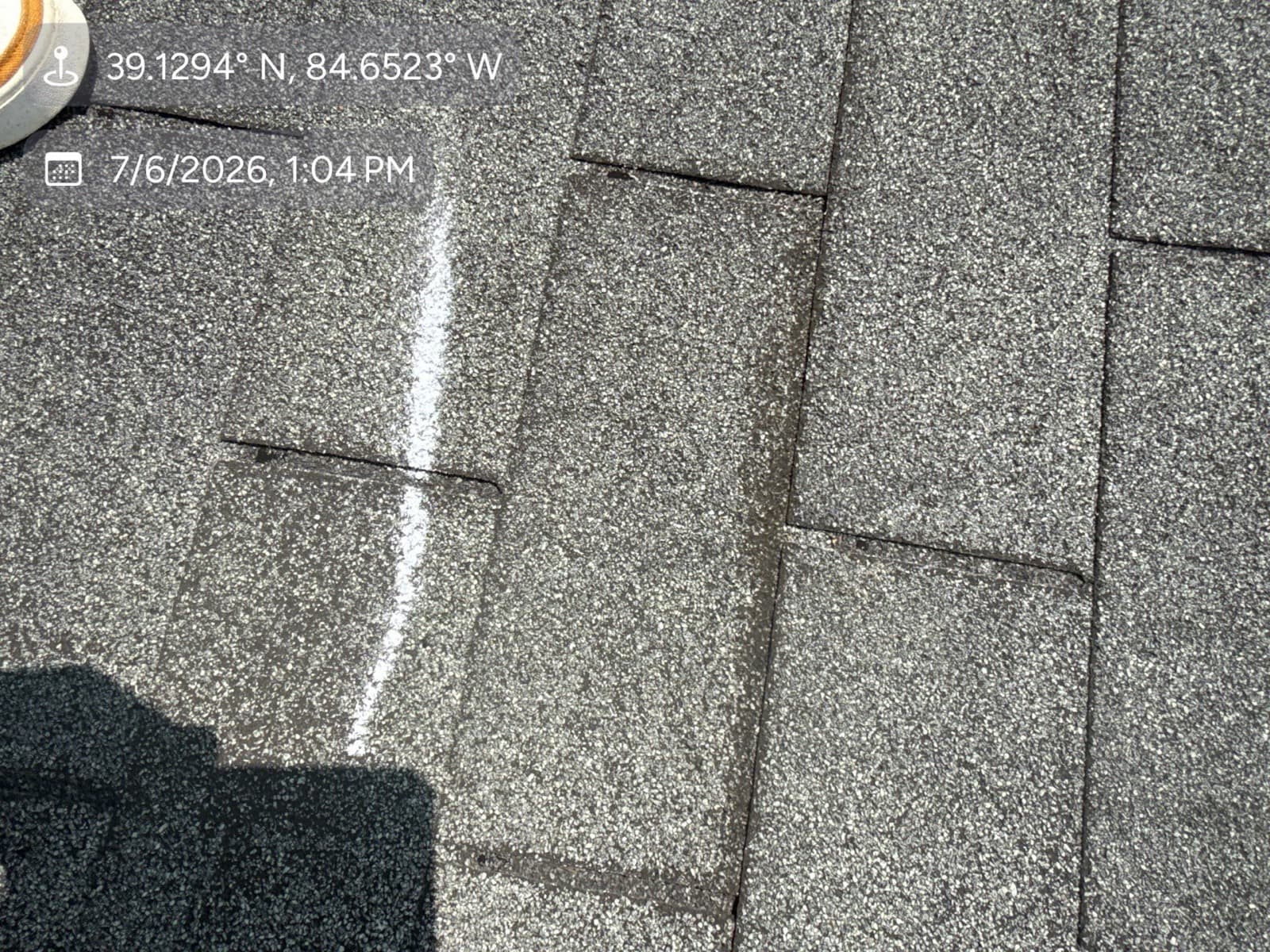
A hail bruise is a dark round spot where granules were crushed away, often with a soft, spongy feel underneath, like a bruised apple. This is the number-one thing an adjuster counts.
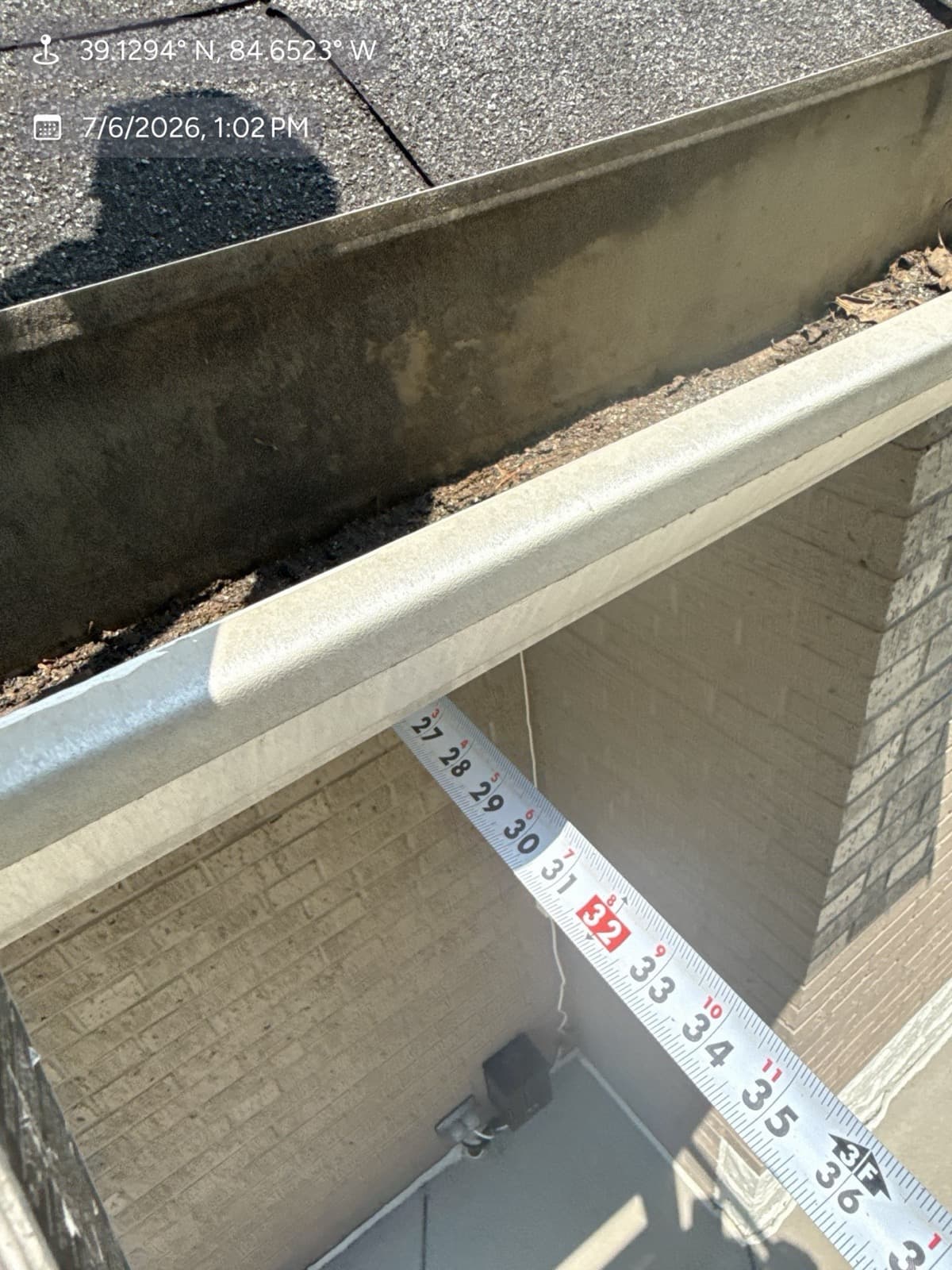
6. Cracked or exposed fiberglass mat
Bigger hail can crack the shingle outright or expose the shiny fiberglass mat beneath the asphalt. Those shingles are done — they will leak.
7. Dented vents, flashing, and skylight cladding
Every metal penetration on your roof is a witness. Box vents, pipe boots, and skylight frames dent easily and prove impact even when shingle damage is subtle.
8. Broken seal strips
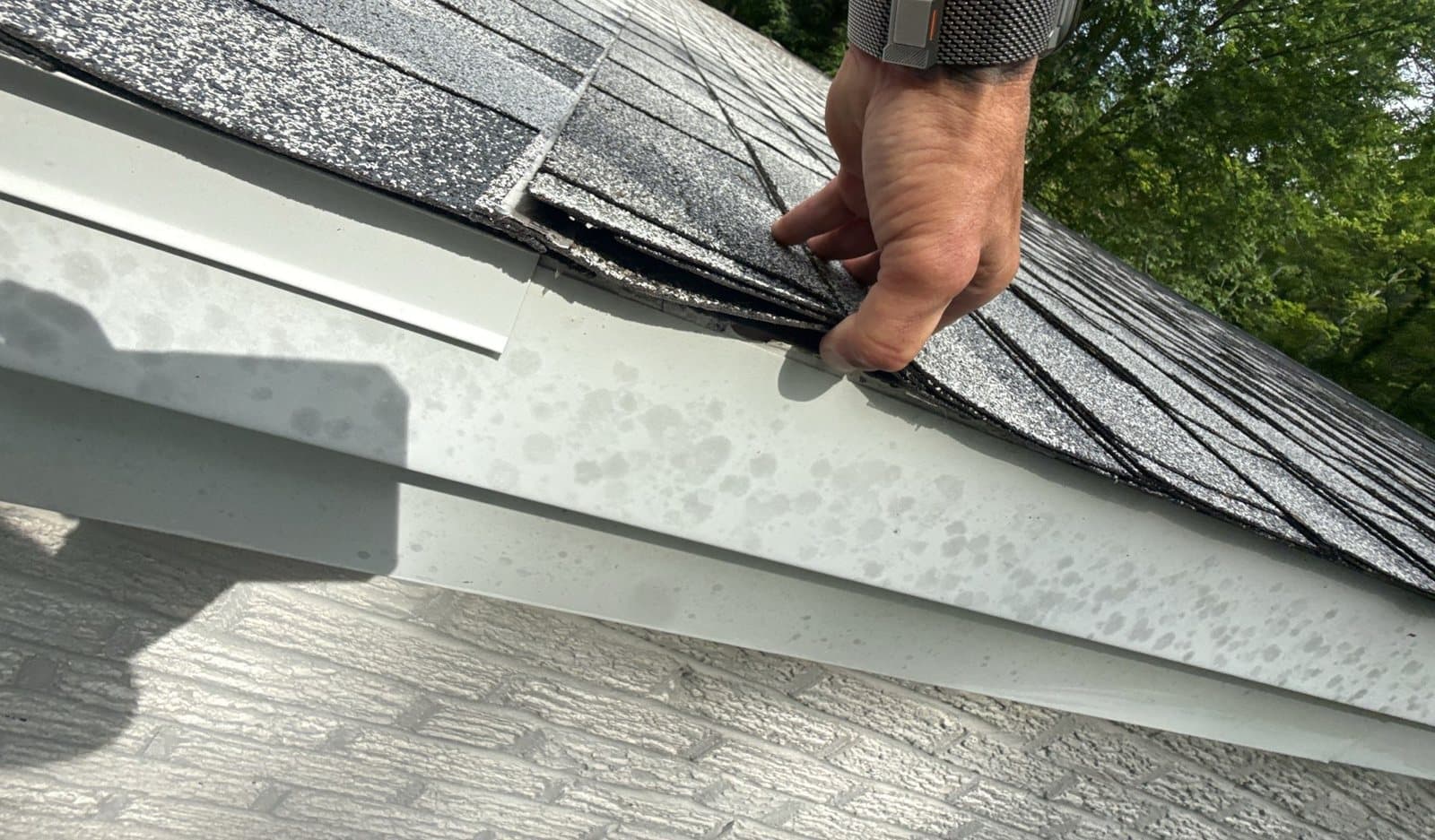
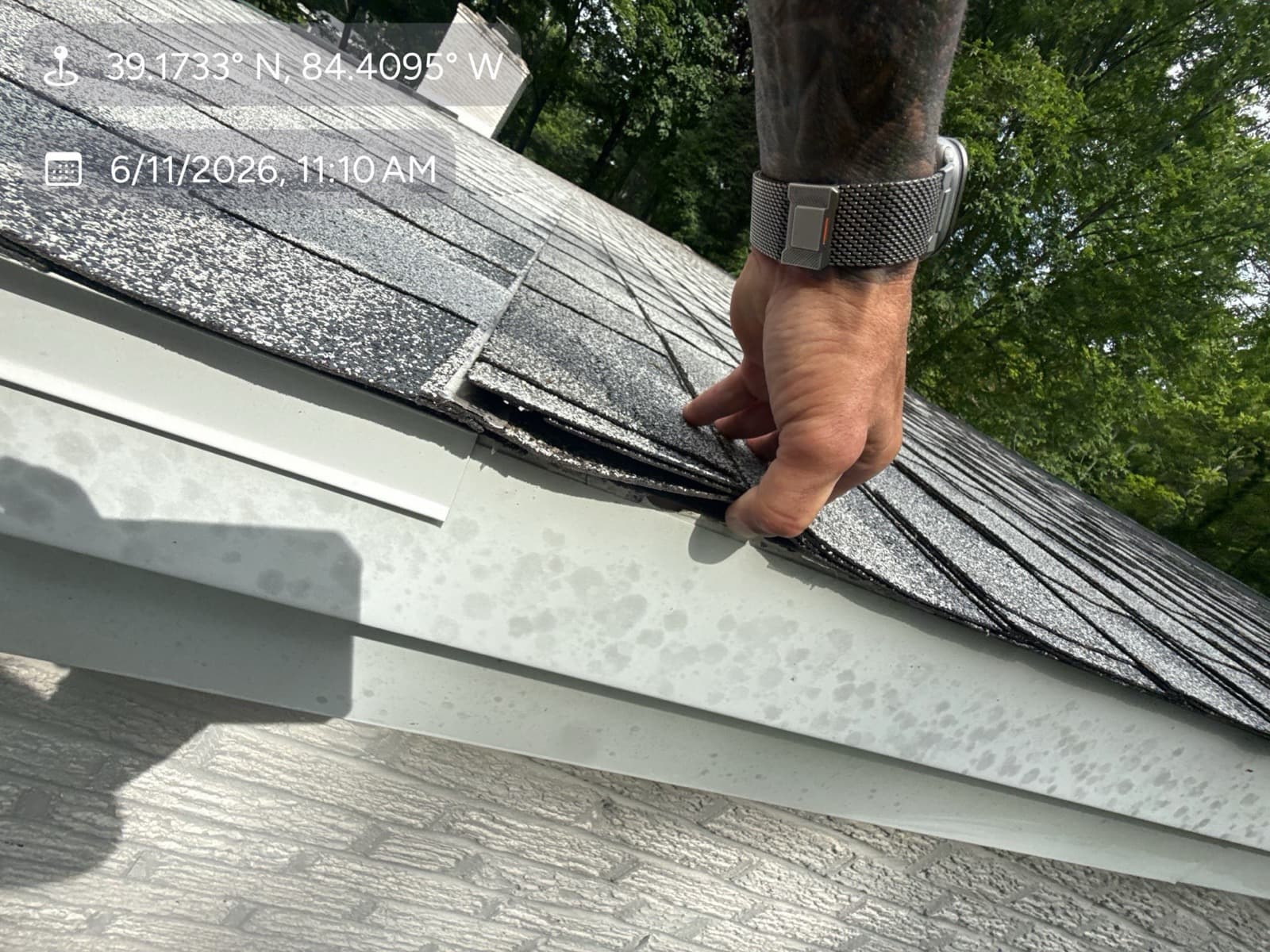
Hail and wind can break the adhesive bond between shingle courses. The roof looks fine — until the next windstorm peels it like a deck of cards.
9. Damage clustered on one or two slopes
Hail arrives at an angle, so damage concentrates on the slopes that faced the storm. That pattern is itself evidence — it's how inspectors distinguish hail from ordinary aging.
We'll inspect it free, mark every strike with chalk, and hand you a photo report — proof you can take straight to your insurance company.
The Clock Matters More Than You Think
Two reasons not to “wait and see.” First, most policies limit how long after a storm you can file — often around a year. Second, unrepaired hail damage accelerates: granule loss exposes asphalt to UV, shingles dry out and curl, seals fail, and what would have been a full insurance replacement becomes an out-of-pocket repair job the carrier can call “neglect.”
A ten-minute look after each big storm, and a free professional inspection when anything looks off — that's the whole discipline.
What size hail damages a roof?
It depends on the shingle age and quality, but 1-inch hail (quarter-sized) is the common threshold for asphalt shingle damage — and older roofs can be damaged by smaller stones, especially with high winds behind them.
My roof is only a few years old. Can it still be hail damaged?
Yes. New shingles resist better, but a strong storm damages roofs of any age — and a newer roof is worth more on a claim, not less.
Should I get on the roof and check myself?
Please don't. Beyond the fall risk, walking a roof wrong can damage shingles, and an untrained eye misses the subtle bruising that matters. Our inspections are free — there's nothing to save by climbing up there yourself.
The storm was months ago. Is it too late?
Probably not — most policies allow claims for around a year after the date of loss, and we can often tie damage to a documented storm event well after the fact. But don't push your luck; call while the window is open.
We're a licensed & insured roofing company serving Greater Cincinnati & Northern Kentucky. Our name is our promise: honest inspections with photos you can see, straight answers about whether your roof actually needs work, and installs we document at every stage. Every inspection is free, and if your roof doesn't need replacing, we'll tell you that too. Call us at (513) 675-2699 or request your free inspection below.